What Are the Early Signs of Dental Disease in Dogs?
Your dog’s dinner bowl is empty just as fast as always, so surely everything’s fine, right? Not necessarily. The early signs of dental disease in dogs rarely announce themselves through a skipped meal. Instead, they show up in quieter details: a faint change in breath, a tooth that catches the light a little differently, a slower approach to a favorite chew toy. Most dogs are stoic enough to keep eating and playing well after discomfort has set in, which is exactly what makes the early signs of dental disease in dogs so easy for even attentive owners to miss. At Partners Animal Hospital Asheville, our veterinary team regularly sees dogs whose dental disease was already underway long before an owner noticed anything wrong. The good news is that these clues are there to be found, if you know where to look. Keep reading to learn what changes deserve a second glance, whether bad breath is worth worrying about, and how quickly a small problem can turn into a much bigger one.
What Changes in a Dog’s Mouth Can Signal a Dental Problem?
Learning to recognize the early signs of dental disease in dogs starts with knowing what a healthy mouth looks like, so changes stand out sooner rather than later. A quick monthly check at home, even just lifting the lip for a few seconds, can make these changes far easier to catch.
Gum and Tissue Changes
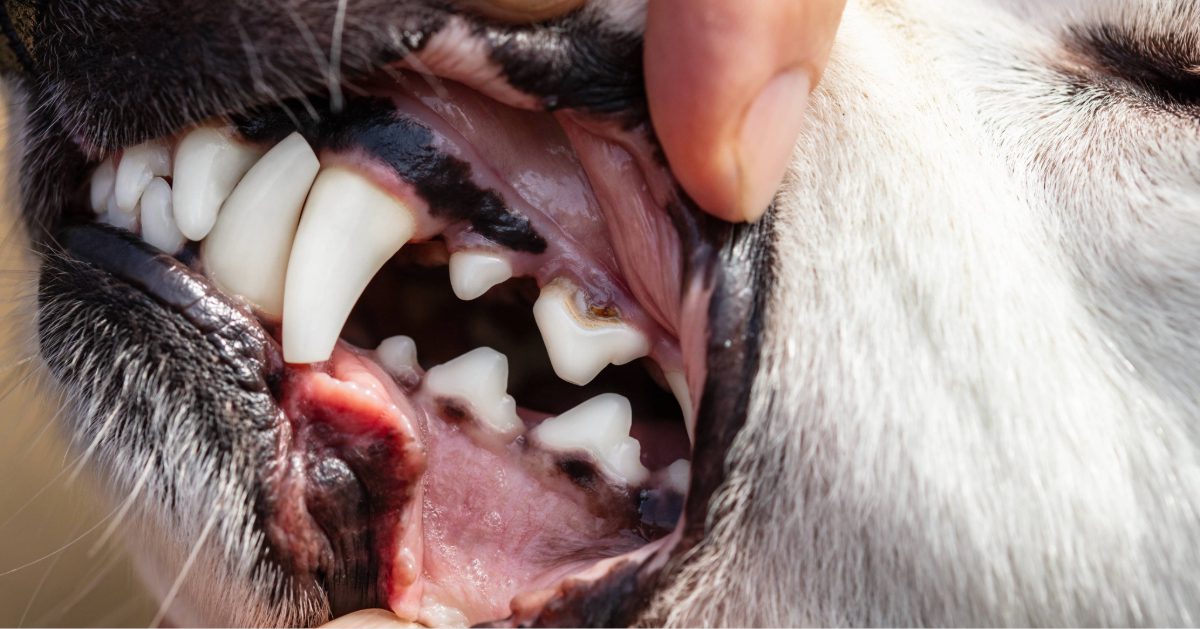
Healthy gums are typically a consistent pink color, firm, and free of swelling. One of the earliest signs of trouble is a thin red line along the gumline, which indicates gingivitis, or inflammation of the gum tissue caused by plaque buildup. This redness is one of the most reliable early signs of dental disease in dogs and is often visible well before a dog shows any outward discomfort. Gums that bleed slightly when touched, even during normal handling or a gentle brushing attempt, are another detail worth flagging to your veterinarian.
Tooth-Level Changes
Discoloration, visible tartar buildup, or a slightly loose tooth can all point to an emerging problem. Tartar often starts as a thin yellowish film near the gumline on the back teeth, a location owners frequently miss during a quick glance at their dog’s mouth. A tooth that looks slightly darker or more yellow than the ones next to it can also be an early clue, even if the dog shows no visible discomfort while eating.
Everyday Behaviors That Hint at Dental Discomfort
Beyond what’s visible in the mouth, subtle shifts in daily habits are also worth tracking as part of the early signs of dental disease in dogs, since discomfort often shows up in behavior before it becomes obvious to the eye:
- Chewing more slowly or favoring one side of the mouth during meals
- Dropping kibble or treats mid-chew more often than usual
- Rubbing the face against furniture or bedding more frequently
- Showing less interest in chew toys that used to be favorites
Noticing any of these shifts early is exactly why our team at Partners Animal Hospital Asheville encourages owners to bring even minor changes to their attention rather than waiting for a scheduled exam.
Can Bad Breath Be an Early Warning Sign of Dental Disease?
Bad breath is often dismissed as simply “dog breath,” but a real change in odor is frequently one of the most noticeable early signs of dental disease in dogs.
What Normal vs. Concerning Breath Smells Like
A dog’s breath is rarely minty fresh, but there’s a meaningful difference between mild, everyday breath and a sharp, unpleasant odor that develops or worsens over a short period. That shift usually points to bacterial activity building up along the gumline rather than something a dog simply ate. Owners who brush their dog’s teeth regularly tend to notice this change faster, since they have a baseline for what normal smells like and can spot the early signs of dental disease in dogs before anything looks visibly different.
Other Clues That Often Show Up Alongside Bad Breath
Bad breath rarely appears completely on its own. It’s worth checking for these related early signs of dental disease in dogs at the same time, since spotting more than one at once is a stronger signal that a dental exam is overdue:
- A thin film of plaque visible on the teeth closest to the cheek
- Slight redness or puffiness along the gumline near the back molars
- Excessive drooling, sometimes tinged with a faint pink color
- A change in how eagerly your dog approaches mealtime
Why Breath Alone Shouldn’t Be Ignored or Overrated
Bad breath by itself doesn’t confirm advanced disease, and it shouldn’t be dismissed either. Because it’s one of the easiest early signs of dental disease in dogs for an owner to notice at home, it’s often the detail that prompts a dental exam before more serious symptoms appear. Treating persistent bad breath as a reason to check in with your veterinarian, rather than something to simply get used to, tends to catch problems while they’re still easy to manage.
How Quickly Can Dental Disease Progress in Dogs?
Dental disease can move faster than many owners expect, which is part of why recognizing the early signs of dental disease in dogs matters so much.
From Plaque to Tartar in a Matter of Days
Soft plaque can begin hardening into tartar within just a few days if it isn’t removed through brushing or natural chewing action. Once hardened, tartar can no longer be brushed away and requires a professional cleaning to remove. This short window is part of why daily or near-daily brushing makes such a measurable difference compared to occasional attention to a dog’s teeth.
How Untreated Gum Inflammation Advances
Left alone, mild gum inflammation can advance toward more significant tissue and bone involvement over a period of months rather than years in some dogs. The exact timeline varies by individual, but the trend is rarely in the dog’s favor without intervention, and the changes that occur at this stage are often more difficult to reverse. Dogs with no prior dental care at all tend to see the fastest progression, since there is no existing routine slowing the buildup down.
Factors That Speed Up Progression
Several factors can accelerate how quickly dental disease moves from mild to more serious:
- Small breed dogs and brachycephalic breeds, whose crowded teeth trap bacteria more easily
- A diet consisting mostly of soft or wet food with little natural abrasive chewing
- Skipped brushing routines or inconsistent at-home dental care
- Existing health conditions that make it harder for the body to fight off infection
Because the early signs of dental disease in dogs can be easy to miss and the condition can progress quickly once it takes hold, regular checkups matter even for dogs who seem perfectly healthy at home. A dog showing several of these risk factors at once may benefit from more frequent monitoring rather than waiting for the standard annual exam.
Staying Proactive About Your Dog’s Oral Health
Recognizing the early signs of dental disease in dogs puts owners in a much stronger position to protect their dog’s comfort and avoid more invasive treatment down the road. Simple habits like periodic at-home mouth checks, consistent brushing, and vet-approved dental chews all help slow the buildup that leads to bigger problems. Our team at Partners Animal Hospital Asheville recommends scheduling a dental exam as soon as any of these early warning signs appear rather than waiting to see if they resolve on their own. Call us at (828) 333-7356 or book an appointment online today. A quick visit today is almost always a smaller ask than the treatment required once dental disease has had time to advance, and staying alert to the early signs of dental disease in dogs is one of the simplest ways an owner in Asheville can protect their dog’s long-term comfort.
Recent Posts
About Us
At Partners Veterinary Group, we believe in energizing our team members through shared values, while helping them create value for our clients and patients. Knowing we can help make pets’ and people’s lives better motivates us to continually strive for excellence and love what we do.
Our team consistently works to build educational, supportive, and cooperative work environments that cater to positive experiences and professional growth. We’re constantly evolving, creating innovative ways to deliver cutting-edge medicine to our patients. We equip our teams with tools to enhance their skills and improve their knowledge.