
My Dog’s Breath Smells Bad: What It Means and When to See a Vet
If your dog’s breath smells bad, it’s usually a sign of bacteria building up in the mouth, not something to dismiss as normal “dog breath.” At Partners Animal Hospital in Asheville, NC, our veterinarians frequently hear pet owners describe a sudden or worsening odor, and in most cases, it points to an underlying dental issue rather than diet alone. Understanding why a dog’s breath smells bad helps pet owners catch problems early, before they turn into pain, infection, or tooth loss. Bad breath is one of the most common reasons pet owners bring their dog in for an unscheduled visit, and it’s often the first noticeable clue that something needs attention. Below, we’ll cover what bad breath reveals about oral health, the specific dental problems that cause it, and when it’s time to schedule a veterinary exam.
What Does Bad Breath Tell You About Your Dog’s Oral Health?
Bad breath, medically known as halitosis, is rarely just a cosmetic issue. When a dog’s breath smells bad, it’s typically a signal that bacteria have colonized the mouth in numbers high enough to produce a noticeable odor. Our team at Partners Animal Hospital Asheville explains that a small amount of mouth odor is normal, but a sharp or persistent smell usually means something has changed.
How Plaque and Bacteria Create Odor
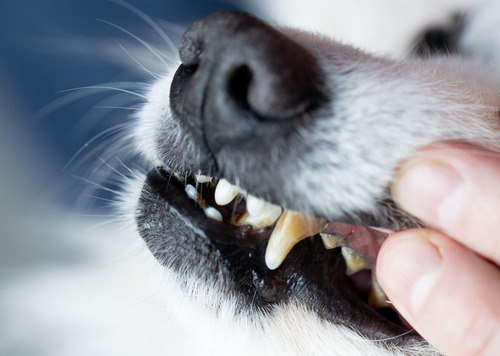
Plaque forms on teeth constantly, and if it isn’t removed through brushing or chewing, it hardens into tartar within a matter of days, often faster than pet owners expect. Bacteria thrive in this tartar, particularly along the gumline, and their waste products are often what create the unpleasant smell pet owners notice. This is why a dog’s breath smells bad most commonly in pets that haven’t had recent dental care, whether professional or at home:
- Bacterial buildup: Odor-causing bacteria accumulate fastest in areas that are hard to reach with a toothbrush, like the back molars.
- Gum inflammation: Inflamed gums, known as gingivitis, release compounds that intensify breath odor even before tartar is visible.
- Trapped food debris: Food particles caught between teeth or under the gumline break down and contribute to the smell over time.
What the Severity of the Odor Can Indicate
The severity of the odor often correlates with how advanced the underlying issue is. A dog’s breath smells bad in a mild, slightly stale way with early plaque buildup, while a sharp, rotten odor usually signals more advanced periodontal disease that needs prompt attention from Partners Animal Hospital Asheville. Breed and age also influence how quickly odor develops. Small and toy breeds tend to have more crowded teeth, which trap bacteria more easily and can cause a dog’s breath to smell bad sooner than in larger dogs with more spacing between teeth. Senior dogs are also more prone to chronic odor simply because plaque and tartar have had many more years to accumulate undisturbed.
What Dental Problems Can Cause a Dog’s Breath to Smell?
Several specific dental conditions explain why a dog’s breath smells bad, and identifying the right cause matters for treatment. Veterinarians at Partners Animal Hospital Asheville look for these conditions during oral exams whenever an owner reports persistent odor.
Periodontal Disease and Other Oral Conditions
Periodontal disease is the most common culprit. As plaque and tartar accumulate below the gumline, bacteria trigger inflammation and, eventually, damage to the structures holding teeth in place. This progressive condition is the leading reason a dog’s breath smells bad in adult and senior dogs, since the bacterial infection deepens the longer it goes untreated. Other oral conditions causing a dog’s breath to smell bad include:
- Tooth abscesses: A cracked or infected tooth can develop a pocket of infection that produces a distinctly foul, sometimes metallic odor.
- Retained baby teeth: In some breeds, baby teeth don’t fall out on schedule, trapping food and bacteria between the extra teeth.
- Oral tumors or growths: Less commonly, growths in the mouth can become infected or necrotic, producing a strong odor that doesn’t improve with brushing.
When Diet or Other Health Conditions Are the Cause
Diet can also play a role, though it’s rarely the sole explanation. Dogs that get into trash, stool, or spoiled food may have temporary bad breath unrelated to dental disease. However, if a dog’s breath smells bad consistently over several weeks despite no dietary changes, an oral health issue is the more likely explanation. Partners Animal Hospital Asheville recommends ruling out dental causes first, since they’re by far the most common source of chronic odor in dogs.
Certain underlying medical conditions can also cause a dog’s breath to take on an unusual smell, though these are less common than dental disease. Kidney disease, for example, can produce breath with an ammonia-like odor, while diabetes can sometimes cause a sweet or fruity scent. These systemic causes are why Partners Animal Hospital Asheville recommends a full veterinary evaluation rather than assuming every case of bad breath originates in the mouth, especially in older dogs with other symptoms like increased thirst, lethargy, or changes in appetite.
When Does Bad Breath Mean Your Dog Needs a Veterinary Dental Exam?
Occasional mild breath odor isn’t usually cause for alarm, but there are specific signs that indicate it’s time to bring your dog to Partners Animal Hospital Asheville for a dental exam. Pet owners shouldn’t wait for the odor to become unbearable before scheduling a visit.
Symptoms That Warrant a Same-Week Visit
If a dog’s breath smells bad along with visible tartar, red or bleeding gums, or reluctance to chew on one side of the mouth, these combined symptoms suggest active dental disease that needs veterinary attention. Isolated bad breath with no other symptoms may still warrant a checkup, but these accompanying signs raise the urgency.
- Sudden onset: A dog’s breath smells bad more urgently when the odor appears suddenly, since this can indicate an abscess, injury, or foreign object lodged in the mouth.
- Pawing at the face: Dogs experiencing oral pain may paw at their mouth or rub their face against furniture or the floor.
- Visible swelling: Facial swelling near the jaw or under the eye can indicate a tooth root abscess that requires prompt treatment.
What Happens During the Dental Exam
Waiting too long to address the cause of bad breath can allow dental disease to progress, potentially leading to tooth loss or, in more serious cases, bacteria entering the bloodstream and affecting other organs. Our veterinary team at Partners Animal Hospital Asheville recommends scheduling an exam as soon as a dog’s breath smells bad persistently, rather than waiting for the next annual wellness visit.
During a dental exam, our veterinarians typically check for tartar buildup, gum health, loose or fractured teeth, and any signs of infection beneath the gumline. In many cases, dogs need a professional cleaning under anesthesia to fully assess and treat the problem, since much of the disease process happens below the visible tooth surface where a standard awake exam simply can’t reach. Catching these issues early, before a dog’s breath smells bad severely, generally means simpler and less costly treatment.
What a Fresh Start Looks Like for Your Dog’s Mouth
Bad breath is often the first noticeable sign that something is wrong inside a dog’s mouth, and it shouldn’t be brushed off as a normal quirk. When a dog’s breath smells bad, it’s the body’s way of signaling that bacteria, plaque, or an underlying dental condition needs attention. Catching these signs early gives pet owners the best chance of avoiding painful, expensive dental procedures down the road.
Partners Animal Hospital in Asheville, NC encourages pet owners to schedule a dental exam whenever persistent bad breath shows up, rather than assuming it will resolve on its own. A prompt visit can identify the exact cause and get treatment started before minor issues become major ones. If you have concerns about your dog’s breath, contact Partners Animal Hospital Asheville at (828) 333-7356 or book an appointment online. Our team is here to help your dog achieve optimal health and well-being.
Recent Posts
About Us
At Partners Veterinary Group, we believe in energizing our team members through shared values, while helping them create value for our clients and patients. Knowing we can help make pets’ and people’s lives better motivates us to continually strive for excellence and love what we do.
Our team consistently works to build educational, supportive, and cooperative work environments that cater to positive experiences and professional growth. We’re constantly evolving, creating innovative ways to deliver cutting-edge medicine to our patients. We equip our teams with tools to enhance their skills and improve their knowledge.